
Maybe it’s time to update the way we think about culture.
For much of what we know of history, we’ve seen culture (or at least our capacity to hold culture) as a zero-sum game: a limited resource container in which for there to be more of one culture there has to be less of another – there’s only so much room. It’s part of the reason there’s such innate fear of foreigners or differences… it helps explain why tolerance, multiculturalism, and integration are such hard disciplines in practice. But what if there was a different way to think about our cultural capacity? I think there is, and there’s even a large group of people who’ve been living out this different model for decades with impressive results.
To explain, I guess we start with what culture actually is… and my favorite definition comes from John Mole, who describes it simply as, “The way we do things around here.” Concise, easy to remember: love it. I would add that culture is dynamic, not static. Culture is always changing, growing, morphing – sometimes slowly, sometimes quickly… but it’s worth bearing in mind that a lot of problems come about when we try to see culture as static, unchanging, a snapshot rather than a movie.
Now, for millennia, I think culture has played out as “survival of the fittest.” Usually when cultures butted up against each other, at some point it led to conflict and conquest. History is full of showdowns between cultures, nations, tribes, and groups based on strength, military might, economics, whatever the case may be, it led to there being winners and losers – not just pragmatically but culturally as well.
Somewhere along the line, we decided culture itself was valuable… it holds diversity of thought, different approaches, things that actually could generate creative new ideas, profitable new ideas even. So we’ve tried to move away from conquest and towards tolerance. It’s still a pretty new concept to be honest. Conquest was all rage for thousands of years, it’s barely been a century or so that we’ve dabbled in tolerance.
And tolerance is hard… we’re still trying to figure out how to do it. It seems to be human nature to fear people who are different. That’s why conquest came so naturally. It’s a hard habit to break. To be honest, I don’t even think tolerance is that great of a goal. If prejudice is negative… we assume tolerance is positive. But, I’d argue that tolerance is really baseline zero: neutral. I mean, it’s not a high bar. If I gave a presentation somewhere and asked for feedback, I wouldn’t consider, “Oh he was tolerable” to be all that positive or complimentary. Tolerance is… well, tolerable not positive.
So how do we do better?
Well, I think we could actually learn a lot from an interesting group of people we call Third Culture Kids. Third Culture Kids are people who’ve grown up with a combination of multiple cultural influences and a high degree of transition or change. So, kids who grow up moving about between different countries or cultures, or who stay in areas where they’re surrounded by people moving constantly coming from different cultures or countries. Think children who grow up in the military, diplomatic corps, ministries, international business – just as a few examples.
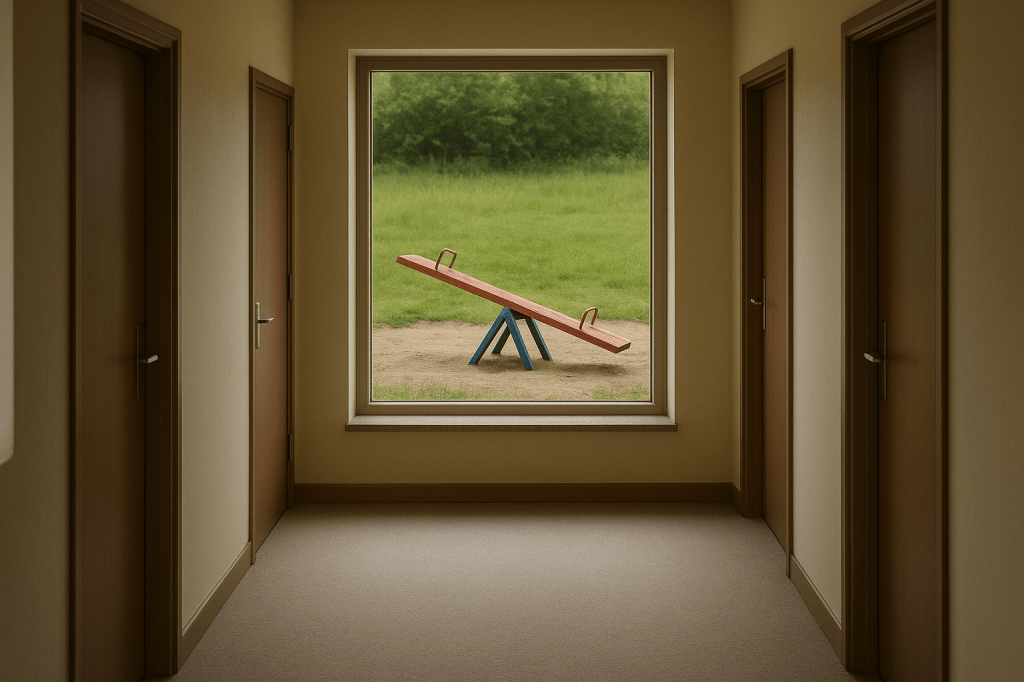
That combination: multiple cultural influences and a high rate of transition creates a unique sort of identity. I think it’s best described as a hallway. If you picture your cultural identity as a house, we can have different rooms in that house represent the different cultures that make you who you are. Let’s take me for example. I was born in the UK, I’m British, and I’ve lived in the UK longer collectively than anywhere else. So there’s definitely a British room in my cultural house. It’s got a portrait of the King, and tea is served promptly at half past three. I’m also American, and I’ve lived in the US for a few years, so there’s an American room in my cultural house as well. It’s got a Starbucks and it’s open 24 hours. I lived in Belgium longer in one go than anywhere else, so there’s a Belgian room, it’s got waffles, chocolate, and a confusing amount of languages. I grew up living on military installations, and culture is more than just national, so there’s a military room in my cultural house, and it’s full of acronyms, so many, many acronyms and quite a bit of camouflage.
Now, if we stop there, you might think that a Third Culture Kid is a blend or mix of all the cultures that make them who they are… So my identity would really be a portrait of the King, a Starbucks, and loads of waffles, in a military warehouse… but that’s not really accurate – even if it does sound like fun. You see, for a TCK, the cultures that make them who they are actually have to stay distinct for their life to work. So they spend time in a sort of “hallway” that connects and runs in-between those cultures. In a way, the hallway is a culture in-and-of itself.
Let’s take some friends I know who are German, living in Tokyo, and sending their son to an international school. When their son wakes up in the morning, he’s in the German room of his cultural identity. He speaks German with his family, they have brotchen for breakfast, and everything is wunderbar. To get to school, their son takes the Tokyo metro. So he has to step out of his German room and into the Japanese room. It’s not just the language that changes; it’s customs, ways of showing respect, personal space, all of it. When he arrives at the international school he attends, which is taught in English, he steps into that room of his cultural identity. It’s not just a shift in language but also what’s considered respectful, personal space, and all sorts of things.
For his life to work, those cultures stay relatively separate. If he spoke Japanese at home, it wouldn’t feel very familiar; if he spoke German at school, far fewer people would understand him, and language is just the tip of the iceberg of culture, which, remember, is “how we do things around here.” So TCKs not only keep the cultures they operate in separate but also transit between them regularly, spending a lot of time in the hallway.
In essence, TCKs have shown us that culture doesn’t have to be a zero-sum game… which is quite a radical departure from how we’ve been treating culture for thousands of years. A zero-sum game is a bit like a seesaw: for one person to be up, someone else has to be down. For one person to have more, someone else has to have less… it’s based on seeing things as limited resources. And many things are limited resources. Many things culture influences and interprets are limited resources.
But, I don’t know that we need to keep treating culture itself as a limited resource… or rather, our capacity to hold culture as a limited resource. TCKs maintain multiple cultures behind multiple doors; they move about between them – and those cultures aren’t at each other’s expense. They live a life that proves culture is not a zero-sum game.
Imagine how our outlook would change if everyone stopped seeing, interacting with, and treating culture like a limited resource. We succumb to a lot of fear from seeing our capacity for culture as limited: we’re scared of people invading our cultural space because they’ll take up room and then there’s not going to be any space left for us and our culture. But what if that’s an old way of thinking that doesn’t take into account what TCKs demonstrate every day: we can hold more than one culture: we have more than one room. You don’t have to squeeze everything into one space. You have multiple spaces.
Everyone already does this to a small degree: how you act with your close friends is probably quite different than how you act with family, or at work… it’s all still you – just different versions for different occasions and audiences. TCKs just prove we have the capacity to upscale that ability more than we probably assumed.
Now, this definitely doesn’t mean giving into complete relativism: that’s impractical. Some values and beliefs are mutually exclusive. On some things, we can’t all be right. Beliefs in one room may be positionally opposed to another room – the messy truth is that we simply can’t harmonize everything. But by shifting away from seeing culture as a zero-sum game, we allow for the mental space and perspective to seek commonality as a priority and make room for the complexity of culture.
When we presume limited space for culture, it’s easy to default towards reasons to keep culture out… something better be worthwhile and compatible if it’s taking up valuable space in my mental existence and understanding, and any disagreements become easy justification to keep a different culture out or limit it.
We actually have the luxury of being far more nuanced when space isn’t limited by a zero-sum interpretation of culture. I can appreciate aspects of a culture without dismissing it for the parts I disagree with – I’ve got the space (and multiple rooms in my cultural hallway) to do that. This sort of mindset allows us the freedom to focus on what we have in common: what the driving forces behind the beliefs we hold say about all of us (without compromising our own framework of values). In short, agreeing to disagree requires space, and we have more of that than we think or have previously made use of.
Third Culture Kids have been studied for half a century, and we’ve learned a lot about our cultural capacity from them. Just like any culture, their upbringing comes with both strengths and challenges… but the reality is the challenges they face, we’re all now facing. The strengths they have, we could all benefit from. It might be time to move on from the zero-sum model we’ve interpreted culture through for millennia and reap the benefits of untapped capacity that have clearly been demonstrated in this demographic: untapped capacity that we all have access to. This cultural lens shift from a zero-sum game to a hallway may be just what we need to take the next step and move beyond mere tolerance to further our progress as a society in this rapidly changing world. Culture isn’t static, it’s dynamic, and we need a better way to navigate its ebbs and flows.
© 2025 Christopher O’Shaughnessy
 Chris-O-Blog